
How to Search Civil Dockets
For a Ripley County civil docket lookup, begin at Indiana MyCase. Use the case number first. For a person search, type a last name. A business-name search runs on its own route. An attorney name or bar number also works. Once inside, select Ripley County. Pick a civil, family, or probate category, and narrow the list with open, closed, and filing-date filters.
- Choose Case, Name, or Attorney and enter a known identifier.
- Select Ripley County or the Batesville City Court option when that venue applies.
- Match the result by court ID, case type, filing date, caption, and status.
- Open the CCS, review events in order, and request any missing public filing from the maintaining clerk.
Case-number searches tolerate dropped hyphens and leading zeros. A trailing wildcard helps, though an entire field cannot be one. Turn on sounds-like when a name spelling is uncertain. If MyCase returns nothing, loosen the court and status filters, retry a known case number, then reach the clerk by phone, counter, mail, or fax.
Ripley Civil Search Fields
Match the search route to what you actually know. A case number starting with 69C01 belongs to Circuit Court, 69D01 to Superior Court, and 69H01 to Batesville City Court. A civil number may read 69D01-YYMM-SC-######. A similar name alone never proves a match.
| Known detail | MyCase field | Use |
|---|---|---|
| Case number | Case Number | Most exact route; up to 30 characters |
| Person | Last, first, middle | Last is required; sounds-like is optional |
| Business | Business Name | Separate from person-name fields |
| Lawyer | Attorney name or bar number | Alternative attorney routes |
The portal caps results at 1,000 records and displays twenty per page. Refine a broad list instead of treating it as complete. The public index serves a focused civic court search and bars bulk extraction.
What a Civil Docket Shows
From opening to later action, the CCS tracks a Ripley County civil case. Expect the complaint or petition and the party roles. The rest covers summons, service, answer, counterclaim, motions, notices, orders, hearings, judgment, and post-judgment activity. A bare closed status does not explain the result. Read the final substantive events plus the judgment or dismissal order where it is public.
| Case header | Court, case number, type, filing date, caption, judge, and status |
|---|---|
| Parties | Plaintiff and defendant or petitioner and respondent roles |
| Early events | Complaint, petition, service, answer, appearance, and counterclaim |
| Case activity | Motions, responses, notices, orders, settings, and document labels |
| Result | Judgment, dismissal, settlement, satisfaction, collection, or appeal events |
A document label is not the document itself. When a pleading or signed order has no public link, request that file item from the Ripley County Clerk. MyCase is not the official record; the clerk's copy controls.
Ripley Civil Filing Milestones
Early docket milestones tell a clear story. Filing opens the matter. Service records delivery of process. An answer or appearance shows a response. A motion requests court action, while an order is the judge's directive, and a proposed order is not a signed one. Ripley Local Rule LR69-TR-02 requires a proposed order plus pre-addressed, stamped envelopes in the local motion workflow.
- Default judgment
- A judgment entered after a required response or appearance is missed.
- Dismissal
- An end to some or all claims under an order or rule.
- Satisfaction
- An entry indicating fulfillment of a judgment.
- Continuance
- A court setting moved to a later date.
- Appeal
- A separate higher-court review route after trial-court action.
Default judgment does not mean closed. Closed also says nothing about payment or satisfaction. Trace the judgment and post-judgment events in the civil docket before concluding anything.
Types of Civil Cases on the Docket
Court assignment and case code sort the Ripley civil docket. Circuit handles plenary, tort, commercial, domestic, support, adoption, estate, trust, guardianship, mental-health, and related matters. Superior takes foreclosure, collection, small claims, and eviction. Protective orders, judicial review, and miscellaneous civil work also land there under current local rules. Batesville City Court carries a separate civil limit of $3,000.
| Type | Codes | Primary Ripley route |
|---|---|---|
| Plenary and tort | PL, CT | Circuit under local assignment |
| Collection and foreclosure | CC, MF | Superior |
| Small claim and eviction | SC, EV | Superior |
| Family and probate | DC, DN, AD, ES, EU, GU, TR | Circuit-heavy assignments |
| City civil dispute | City docket | Batesville, up to $3,000 |
That city ceiling is not a countywide small-claims rule. Check the filing court shown in the case number and CCS.
Ripley Superior Civil Dockets
Superior Court 69D01 carries a heavy share of the Ripley County civil docket: collections, foreclosure, small claims, evictions, and protective matters. In 2024 the county recorded 528 civil collections filings. That figure gives caseload context only, not a forecast for one case or a count of every civil category.
A collection case can run on after judgment. Payment, garnishment, satisfaction, or other post-judgment events keep it moving. An eviction may show a possession setting and later money issues. A foreclosure can pile up motions, orders, sale-related events, and judgment. So read the exact case code and event history. The Indiana trial-court statistics source explains the statewide reporting context.
Settings and Hearings on Civil Dockets
A Ripley County civil docket can list a status conference or a motion hearing. It may also carry a bench or jury trial, protective-order hearing, probate setting, or another event. The setting line may carry date, time, type, and court or room. Treat it as a schedule marker only. The related motion and later order explain what was requested and decided.
Resets and continuances stay in the CCS history. Locate the newest dated setting and any order that moved the event. Under LR69-AR-02, a continuance request should come when the reason is known. It should generally be in writing no later than ten days before the matter, subject to stated exceptions. Even when the parties agree, the court may still deny it.
With a date near, check the CCS and CourtCal. Then confirm with the court office or clerk. The fuller Ripley County court calendar route covers online, phone, counter, and posted-calendar checks.
Ripley Civil Documents Online
Plenty of non-confidential civil orders in a Ripley County case carry public links. Not everything does. What you can open from home depends on the case type and on your level of access. So treat the docket as a map rather than a full file. The official MyCase access table lays out which document groups you can pull online. It also shows which exist only at the courthouse. It is common to see a judgment event in the docket with no pleading attached. That gap is not an error. When that happens, the clerk is the fallback for the underlying court record.
Read the table to tell a public CCS event apart from real remote access to the document behind it. One is a docket line. The other is the paper.
Quick answer: A docket event proves that the clerk recorded an act. A certified judgment is a clerk-certified copy of the signed record and must be requested from the custodian.
Ordering a copy takes a case number and the exact document name. The Ripley County Clerk sits at 115 North Main Street, P.O. Box 177, Versailles, and answers the phone at 812-689-6115. Counter, phone, mail, and fax all work as channels. Ask the staff about turnaround and certification terms. Do that before you count on a deadline.
Public Access to Civil Dockets
Indiana Access Rule 4 sets out the general principles for public access to court records and handles remote access as its own subject. The rule's official page shows the full text.
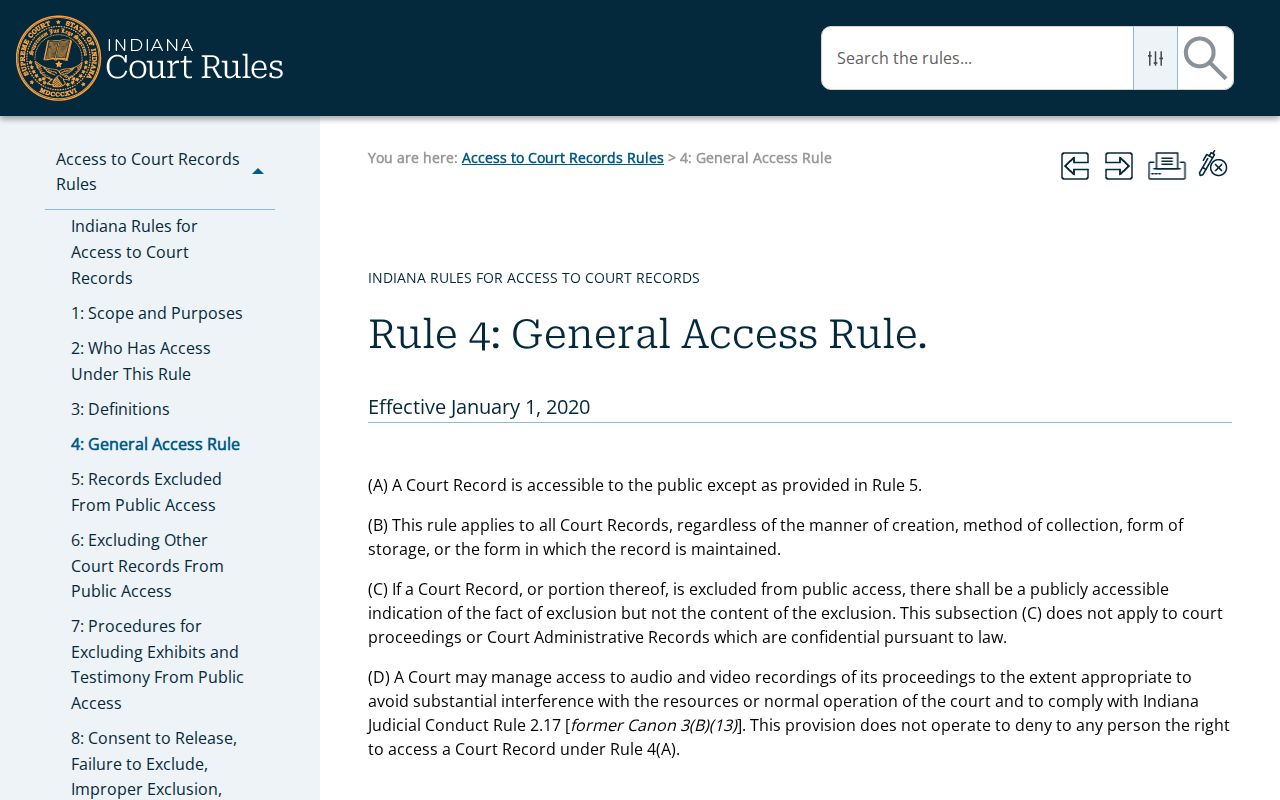
The rule backs public access. But it never promises that every civil document lands on the internet. Rule 5 shields certain cases, records, and data from view. Adoption, juvenile, and mental-health matters, protected identifiers, and sealed material may be withheld or redacted. A family or protection case can show a public shell in the docket. Its documents may still stay restricted. A missing name, a hidden image, or a blacked-out line tells you nothing. It says nothing about the case itself.
Rule 9 creates a request process for excluded records when extraordinary circumstances exist. The rule's own page spells out that procedure.
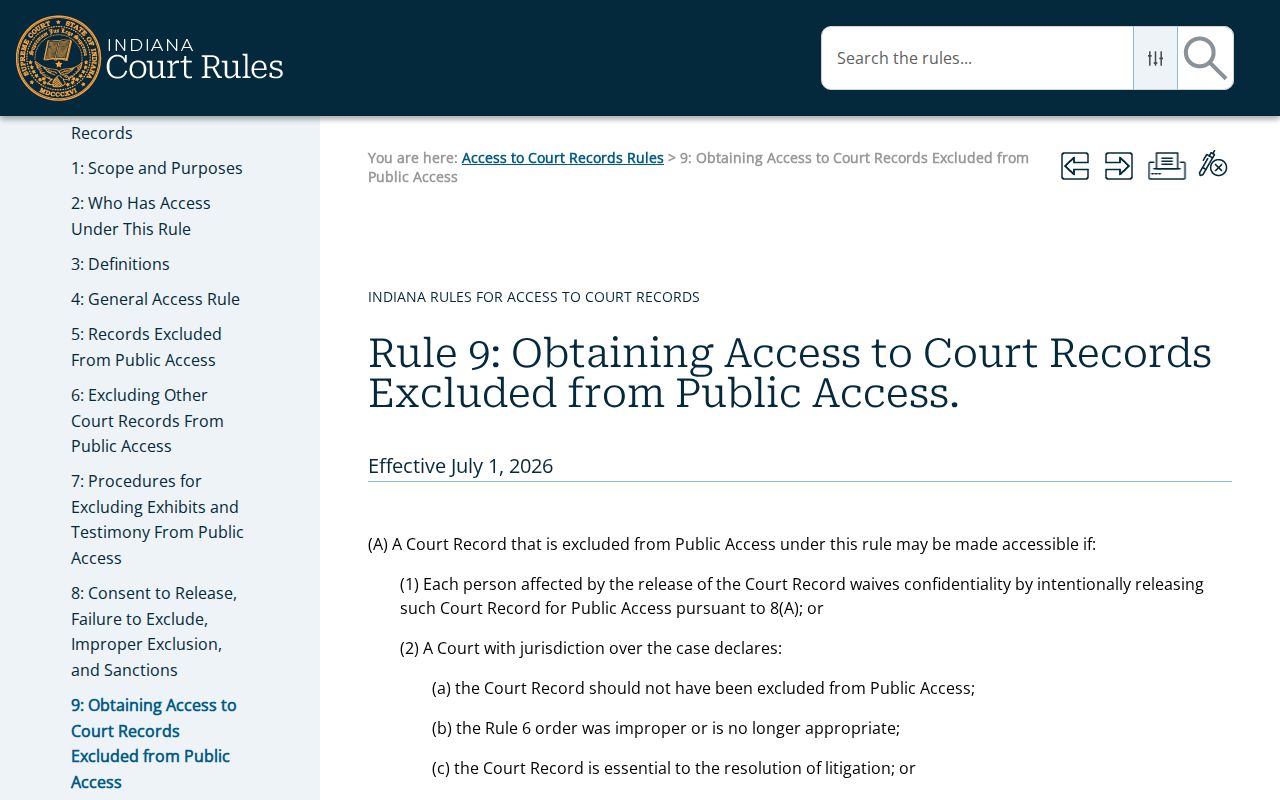
That process applies real legal standards. Filing a request does not guarantee access to a restricted file.
Verify Ripley Civil Case Results
Reading a Ripley County civil docket works best in order. Confirm the court and the case number first. Then read the filing and service entries. Find the response next. Follow the motions and orders until you reach the newest hearing setting. Locate the judgment or dismissal, and review whatever post-judgment entries follow. A caption alone rarely answers the real question. Neither does a status label or an event title.
For a free index, use MyCase. If a public filing is missing, go through the Clerk. The same applies if you need a certified copy. Counter, phone, mail, or fax all work. Court-specific scheduling questions go to the Circuit or Superior staff. Batesville City Court handles its own docket. Transcripts belong to the court reporter. Each channel covers different records, and none substitutes for another.
Note: Verify any amount or current balance with the clerk. The online financial display can lag behind the official ledger.